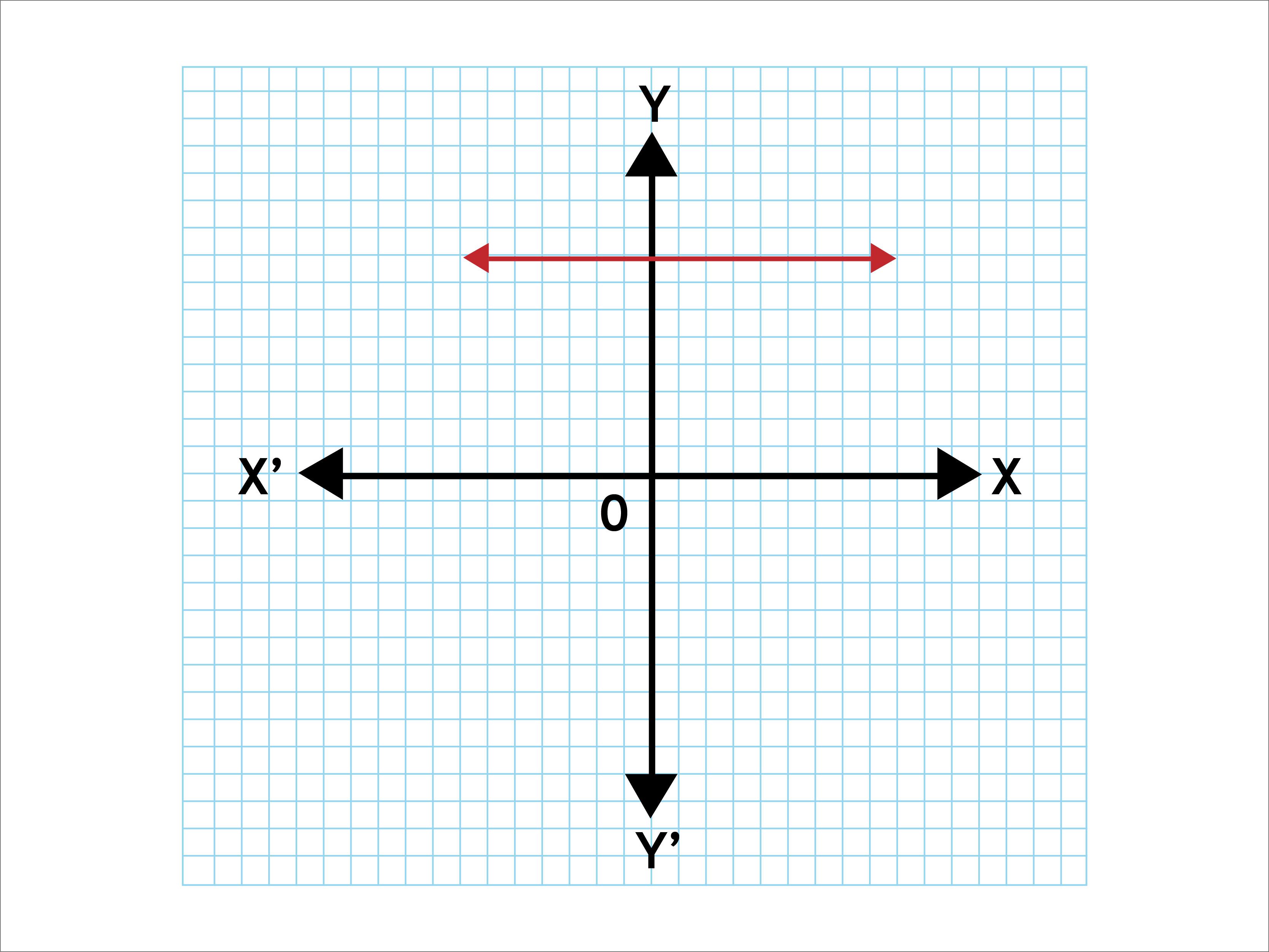
The graphs of y = p(x) is given in the following figure, for
some polynomial p(x). Find the number of zeroes of p(x).
The graphs of y = p(x) is given in the following figure, for some polynomial p(x). Find the number of zeroes of p(x).
Find a quadratic polynomial of 4, 1 as the sum and product of its zeroes respectively.
Find the zeroes of 4s2–4s+1 and hence find the sum and product of the zeroes using relationship between the zeroes and the coefficients.
Find the zeroes of x^2–2x –8 and hence find the sum and product of the zeroes using relationship between the zeroes and the coefficients.
Find the zeroes of 6x2–7x–3 and hence find the sum and product of the zeroes using relationship between the zeroes and the coefficients.
Find the zeroes of 4u2 + 8u and hence find the sum and product of the zeroes using relationship between the zeroes and the coefficients.
Find the zeroes of t2 = 15 and hence find the sum and product of the zeroes using relationship between the zeroes and the coefficients.
Find the quadratic polynomial for which 1/4 and -1 are the sum and product of its zeroes respectively.
Find a quadratic polynomial of √2, 1/3 as the sum and product of its zeroes respectively.
Find a quadratic polynomial of 0, √5 as the sum and product of its zeroes respectively.
Find a quadratic polynomial of 1, 1 as the sum and product of its zeroes respectively.
Find a quadratic polynomial of -1/4, 1/4 as the sum and product of its zeroes respectively.
Find the zeroes of 3x2–x–4 and hence find the sum and product of the zeroes using relationship between the zeroes and the coefficients.
Divide the polynomial p(x) = x3-3x2+5x–3 by the polynomial g(x) = x2–2 and find the quotient and remainder.
Divide the polynomial p(x) =x4–5x+6 by the polynomial g(x) = 2–x2 and find the quotient and remainder.
State whether the first polynomial of t2-3, 2t4+3t3-2t2-9t-12 is a factor of the second polynomial by dividing the second polynomial by the first polynomial.
State whether the first polynomial of x3-3x+1, x5-4x3+x2+3x+1 is a factor of the second polynomial by dividing the second polynomial by the first polynomial:
What are the other two zeroes of 3x4+6x3-2x2-10x-5, if two of its zeroes are √(5/3) and – √(5/3)?
On dividing x3-3x2+x+2 by a polynomial g(x), the quotient and remainder were x–2 and –2x+4, respectively. Find g(x).
Which of the following is an example of polynomials p(x), g(x), q(x) and r(x), which satisfy the division algorithm where deg p(x) = deg q(x) ?
Which of the following is an example of polynomials p(x), g(x), q(x) and r(x), which satisfy the division algorithm and deg q(x) = deg r(x) ?
Which of the following is an example of polynomials of p(x), g(x), q(x) and r(x), which satisfy the division algorithm where deg r(x) = 0 ?
Divide the polynomial p(x) = x4-3x2+4x+5 by the polynomial g(x) = x2+1-x and find the quotient and remainder.
State whether the first polynomial of x2+3x+1 , 3x4+5x3-7x2+2x+2 is a factor of the second polynomial by dividing the second polynomial by the first polynomial:
State whether the first polynomial of p+1,\ p^3+2p^2-3p+6 is a factor of the second polynomial by dividing the second polynomial by the first polynomial.
State whether the first polynomial of x-1,\ \ x^2+2x+3 is a factor of the second polynomial by dividing the second polynomial by the first polynomial.
State whether the first polynomial of x-3,\ x^4+2x^3-2x^2+3x-9 is a factor of the second polynomial by dividing the second polynomial by the first polynomial:
State whether the first polynomial of 2x+1,\ 6x^4+7x^3+4x^2+9x+4 is a factor of the second polynomial by dividing the second polynomial by the first polynomial:
State whether the first polynomial of x-3,\ 2x^3-11x^2+17x-6 is a factor of the second polynomial by dividing the second polynomial by the first polynomial:
State whether the first polynomial of 2x+1,\ 2x^4-5x^3+x^2+12x+5 is a factor of the second polynomial by dividing the second polynomial by the first polynomial:
State whether the first polynomial of 3x^2+2x-1,\ 6x^4+10x^3+5x^2-1 is a factor of the second polynomial by dividing the second polynomial by the first polynomial:
State whether the first polynomial of 3x+5,\ 15x^3+31x^2+x-15 is a factor of the second polynomial by dividing the second polynomial by the first polynomial:
State whether the first polynomial of 2x-1,\ 2x^3+2x^2-5x-1 is a factor of the second polynomial by dividing the second polynomial by the first polynomial:
State whether the first polynomial of x-1,\ 5x^3+2x^2-6x+3 is a factor of the second polynomial by dividing the second polynomial by the first polynomial:
If the polynomial x^4-6x^3+16x^2-25x-10 is divided by another polynomial x^2-2x+k , the remainder comes out to be x + a, find k and a.
State whether the numbers given alongside of the cubic polynomials below are their zeroes. Also verify the relationship between the zeroes and the coefficients in **2x3+x2-5x+2; -1/2, 1, -2** .
State whether the numbers given alongside of the cubic polynomials below are their zeroes. Also verify the relationship between the zeroes and the coefficients in **x3-4x2+5x-2** ;2, 1, 1 .
If two zeroes of the polynomial x4-6x3-26x2+138x-35 are 2 ±√3, find other zeroes.
If the zeroes of the polynomial x3-3x2+x+1 are a – b, a, a + b, find a and b.



 Facebook
 Whatsapp
 Copy Link


